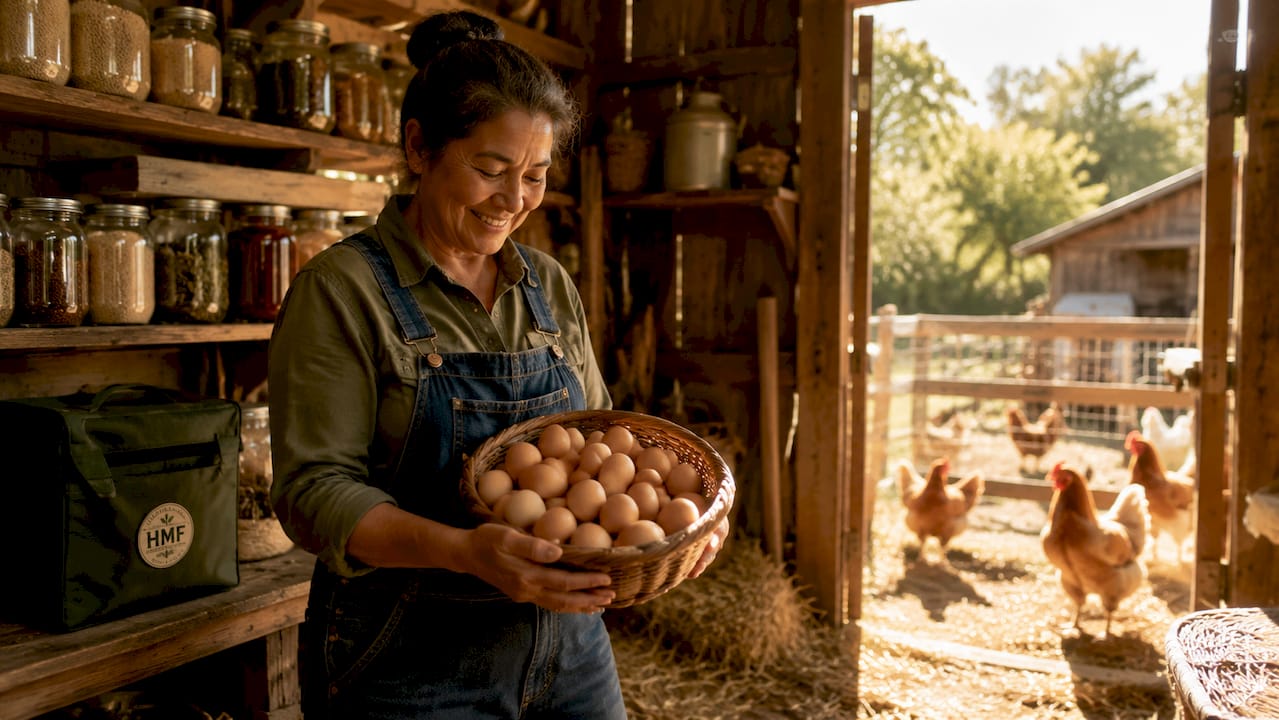
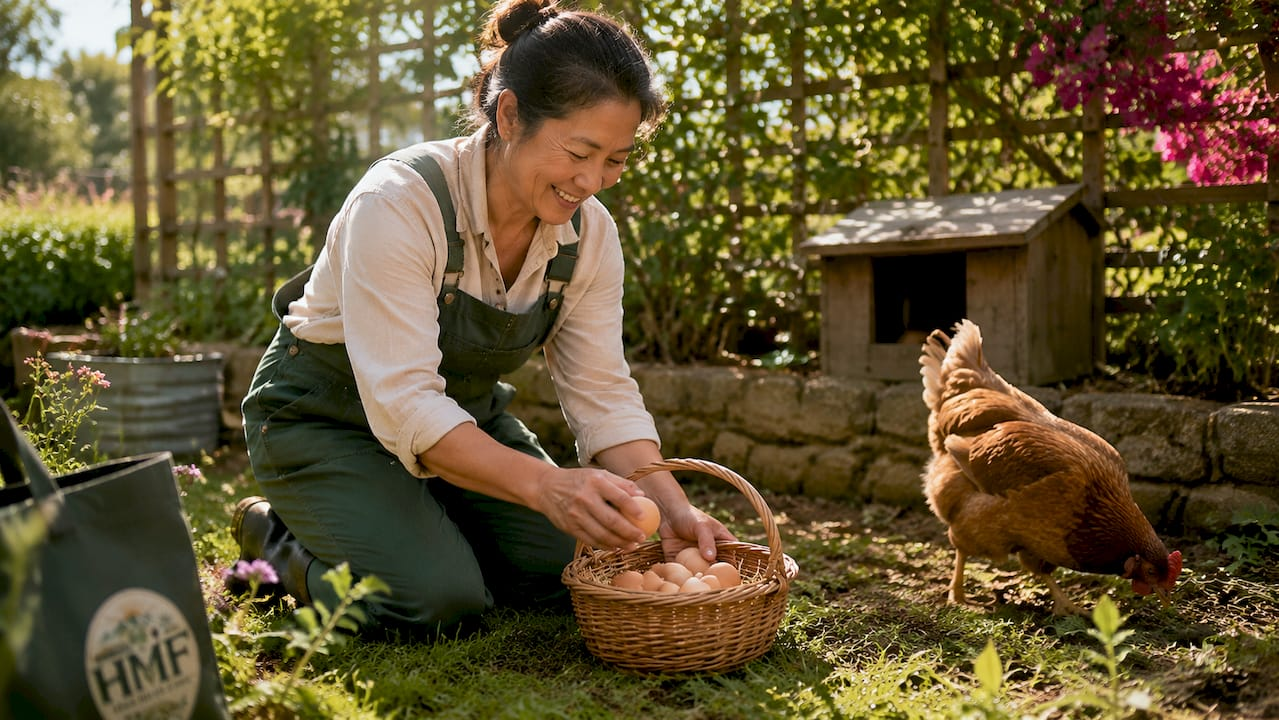
Sustainable egg production is the practice of raising hens and collecting eggs in ways that protect the environment, support animal welfare, and keep farms financially viable over the long term. The industry term for this approach is “climate-smart egg production,” and it covers everything from what hens eat to how their waste is managed. For families and small-scale farmers, understanding these methods means making smarter choices at the store and on the farm. We put this guide together to walk you through exactly what makes eggs sustainable and how you can apply those principles yourself.
What is sustainable egg production, really?
Sustainable egg production balances three priorities at once: environmental responsibility, hen welfare, and farm productivity. These three goals are not in conflict. When managed well, they reinforce each other. A hen that eats efficiently, lives in a healthy environment, and is well cared for produces more eggs with fewer resources. That is the core logic behind every sustainable farming practice covered in this article.
The key components include feed composition, hen breed selection, housing design, manure management, and lifecycle planning. Each one affects the farm’s carbon footprint, water use, and land impact. According to United Egg Producers, modern egg farming now produces eggs with 71% lower greenhouse gas emissions and 32% less water use compared to the 1960s. That progress came from stacking improvements across all of these areas, not from any single fix.

How does feed composition reduce carbon emissions?
Feed is the single largest driver of carbon output in egg farming. Feed accounts for roughly 80% of total carbon emissions in egg production. That one number tells you where to focus first if you want to reduce your farm’s environmental footprint.
The most common feed ingredient, soy, carries a heavy land-use burden. Clearing land for soy cultivation releases stored carbon and destroys habitat. Replacing soy with alternatives like corn gluten meal, sunflower meal, or insect-based proteins directly cuts that impact. Switching to corn gluten and sunflower meal can reduce emissions by up to 20% per egg. That is a meaningful reduction achievable without changing anything else on the farm.
Insect meals are one of the most promising alternatives available today. Black soldier fly larvae can replace 5–15% of soybean meal in poultry diets without affecting growth rates or feed conversion. They require far less land and water to produce than any conventional crop-based protein. Some farms are even growing insect colonies on-site using food waste, which creates a closed-loop system.
Here are the main feed alternatives worth considering:
- Corn gluten meal: High protein, low land-use impact, widely available in the US
- Sunflower meal: Good amino acid profile, lower carbon footprint than soy
- Black soldier fly larvae: Excellent protein density, can be raised on organic waste
- Microalgae: Emerging option that can mitigate pollution from animal wastes while providing nutrition
- Canola meal: Regionally available in many US states, lower deforestation risk than soy
Precision nutrition programs take feed management one step further. Digital monitoring tools track each flock’s intake, body weight, and production output in real time. Farmers can then adjust rations daily rather than monthly, cutting waste and improving the feed conversion ratio (FCR). FCR measures how many pounds of feed it takes to produce one pound of eggs. FCR improvements drive sustainability gains across land, water, and carbon simultaneously.
Pro Tip: Choose feed ingredients with documented supply chain transparency. Corn gluten sourced from US-grown corn carries a much lower land-use change risk than imported soy from regions with active deforestation.

Does hen breed choice really affect sustainability?
Breed selection is one of the most underestimated sustainability levers in egg farming. Different breeds eat different amounts, lay for different lengths of time, and produce different amounts of waste. Those differences add up fast across a flock of hundreds or thousands of hens.
White-feathered breeds like the Leghorn are smaller in body size than brown-feathered breeds like the Rhode Island Red. Smaller body size means less feed consumed per day, and a longer productive lifespan means fewer replacement birds needed each year. Sainsbury’s in the UK found that switching to white-feathered hens reduced greenhouse gas emissions by 12.7% compared to brown-feathered flocks. That is a significant gain from a single management decision.
Here is what to evaluate when choosing a breed for sustainable production:
- Feed conversion ratio: How efficiently does the breed convert feed into eggs?
- Productive lifespan: Breeds that lay well for 80+ weeks reduce replacement costs and emissions
- Body weight: Lighter breeds consume less feed and produce less manure per bird
- Behavioral traits: Calmer breeds cause less stress-related mortality, which reduces waste
- Local adaptability: A breed suited to your climate stays healthier with fewer interventions
Heritage breeds like the Blue Breasted Brown Leghorn offer a strong balance of feed efficiency and resilience. At Halemalufarms, we work with heritage genetics specifically because they perform well in Hawaii’s climate without requiring intensive inputs. You can explore heritage layer hen options if you are building or expanding a flock with sustainability in mind.
Pro Tip: Before committing to a breed, ask your supplier for documented FCR data and average productive lifespan. These two numbers predict long-term sustainability performance better than any marketing claim.
What housing and welfare practices make egg farms more sustainable?
Housing design directly affects both hen welfare and greenhouse gas output. Controlled environment housing, which regulates temperature, ventilation, and light, keeps hens calmer and healthier. Healthier hens produce more consistently and require fewer medical interventions. The European Egg2025 initiative identified improved housing and free-range systems as two of the most impactful changes farms can make to meet sustainability goals.
Free-range and pasture-raised systems add another layer of benefit. Hens that access outdoor areas scratch the soil, spread manure naturally, and reduce the concentration of waste in any one spot. This improves soil health and reduces the risk of ammonia buildup, which is a significant source of air and water pollution near conventional poultry operations.
Manure management deserves its own focus. Manure management reduces methane and nitrogen emissions and can convert waste into biochar, organic fertilizer, or renewable energy. Most small farms treat manure as a disposal problem. Sustainable farms treat it as a resource. Biochar made from poultry manure improves soil carbon retention and reduces the need for synthetic fertilizers.
Here is a practical sequence for improving housing sustainability on a small farm:
- Improve ventilation first. Good airflow reduces ammonia, keeps hens healthy, and lowers disease pressure without medication.
- Add outdoor access. Even a small scratch area reduces indoor manure concentration and improves hen behavior.
- Collect manure frequently. Daily or every-other-day removal cuts methane production significantly compared to weekly cleanouts.
- Compost or convert manure. A simple compost system turns waste into a soil amendment you can use in a garden or orchard.
- Install sensors if your scale allows. Automated feeding and environmental sensors reduce waste and catch health issues early.
“Successful sustainability involves stacking innovations across breeding, nutrition, housing, and waste management as a circular system rather than relying on a single solution.” — World Egg Organisation
How do lifecycle management and data tools improve outcomes?
Lifecycle management means thinking about the hen’s entire productive life, not just the current laying cycle. Farms that extend laying cycles and reduce replacement rates lower their total carbon output per dozen eggs. Fewer replacement birds means less energy spent on hatching, brooding, and growing pullets to laying age.
Trouw Nutrition’s Carbon Reduction Programme integrates precision nutrition, digital monitoring, and layer longevity planning to reduce carbon footprint without cutting production. Their tools, MyEggPrint and MyFeedPrint, let farmers calculate a carbon baseline and then model the impact of specific changes before making them. This removes guesswork and helps prioritize the highest-impact actions first.
Key lifecycle strategies that work at any farm scale include:
- Extend the laying cycle: Push productive life from 72 weeks to 80+ weeks through nutrition and health management
- Track mortality rates: High mortality signals a welfare or management problem that also inflates your carbon footprint per egg
- Monitor egg weight trends: Declining egg weight late in the cycle signals nutritional gaps that reduce efficiency
- Plan flock transitions carefully: Overlapping old and new flocks wastes feed and housing capacity
Pro Tip: Even without commercial software, you can track FCR manually using a simple spreadsheet. Record weekly feed input and egg output by weight. A rising FCR over time signals a problem worth investigating before it becomes expensive.
Organic, free-range, cage-free, or pasture-raised: what is the difference?
These four labels represent different production systems, each with its own welfare standards, environmental footprint, and cost profile. Understanding the differences helps you choose eggs that match your values and budget.
| Production Method | Hen Welfare Standard | Environmental Footprint | Typical Cost | Key Certification |
|---|---|---|---|---|
| Cage-Free | No cages, indoor only | Moderate; high density possible | $ to $$ | USDA, Certified Humane |
| Free-Range | Outdoor access required | Lower; better manure distribution | $$ | USDA Organic, Red Tractor |
| Pasture-Raised | Minimum 108 sq ft per hen outdoors | Lowest; soil health benefits | $$$ | Certified Humane, AWA |
| USDA Organic | Cage-free plus organic feed required | Moderate; no synthetic inputs | $$ to $$$ | USDA National Organic Program |
A few things this table does not show: pasture-raised eggs often have higher omega-3 content because hens eat insects and plants outdoors. Organic certification requires feed free of synthetic pesticides but does not mandate outdoor access beyond a small porch. Certified Humane is one of the most rigorous third-party welfare standards available in the US and covers space, enrichment, and handling.
For families buying eggs, the most sustainable choice depends on what you prioritize. If animal welfare is your top concern, look for Certified Humane or Animal Welfare Approved labels. If carbon footprint matters most, pasture-raised from a local farm typically beats imported organic. If budget is the constraint, cage-free from a regional producer is a meaningful step up from conventional. You can also read more about why local egg production matters for your community beyond just the environmental angle.
Key takeaways
Sustainable egg production requires coordinated improvements across feed, breed selection, housing, and lifecycle management to meaningfully reduce environmental impact while maintaining productivity.
| Point | Details |
|---|---|
| Feed drives most emissions | Feed accounts for roughly 80% of carbon output; switching to insect meals or sunflower meal cuts this significantly. |
| Breed choice matters | White-feathered breeds like Leghorns produce 12.7% fewer GHG emissions than brown-feathered alternatives. |
| Housing and manure management | Frequent manure removal and outdoor access reduce methane, ammonia, and soil pollution at any farm scale. |
| Lifecycle planning reduces waste | Extending laying cycles and tracking FCR weekly lowers the carbon cost per dozen eggs over time. |
| Labels are not equal | Certified Humane and pasture-raised standards deliver stronger welfare and environmental outcomes than cage-free alone. |
What i’ve learned running a farm in hawaii
Here is something most sustainability guides skip: the hardest part is not knowing what to do. The hardest part is doing it in the right order. When we started building out our systems at Halemalufarms, we tried to fix everything at once. Feed, housing, breed selection, manure composting. It was overwhelming and expensive.
What actually worked was starting with feed. Feed is where the biggest impact lives, and it is also where you see results fastest in your cost sheet. Once feed efficiency improved, we had the margin to invest in better housing. Better housing improved hen health, which reduced mortality, which improved our FCR further. Each improvement funded the next one.
I also think the industry conversation around certifications can mislead small producers. Chasing a label before your core management practices are solid is backwards. A Certified Humane label on a poorly managed farm does not make the eggs more sustainable. The practices come first. The certification follows.
Consumer demand is genuinely shifting. Families are asking better questions at farmers markets and grocery stores. That pressure is real and it is accelerating farm-level change faster than regulation alone ever could. If you are a small producer, that is good news. Your story, your practices, and your relationship with buyers are competitive advantages that large operations cannot replicate.
Start small. Track one metric. Improve it. Then move to the next. That is the honest path to a farm that is both sustainable and financially sound.
— kai
Start your sustainable flock with Halemalufarms
If you are ready to put these practices into action, Halemalufarms is your local source for heritage layer hens and poultry supplies built for sustainable farming. We raise breeds selected for feed efficiency, long productive lifespans, and adaptability to Hawaii’s unique climate conditions.

Whether you are starting a backyard flock or scaling up a small farm operation, we carry the breeds and feed and supplies that support ethical, environmentally friendly egg production. Our heritage layer hens are available for order and come from genetics selected for both welfare and performance. Browse our full catalog and find the right birds for your setup today.
FAQ
What is the biggest factor in sustainable egg production?
Feed composition is the largest single factor, accounting for roughly 80% of carbon emissions in egg production. Switching to lower-impact protein sources like insect meals or sunflower meal delivers the fastest measurable reduction.
Are free-range eggs always more sustainable than cage-free?
Free-range eggs generally have a lower environmental footprint than cage-free because outdoor access improves manure distribution and soil health. However, local sourcing and farm management practices matter as much as the label itself.
What does certified humane mean on an egg carton?
Certified Humane is a third-party welfare certification that sets specific standards for space, enrichment, handling, and feed. It is one of the most rigorous animal welfare labels available in the US market.
How does hen breed selection affect carbon emissions?
Breed selection directly affects feed consumption and productive lifespan. White-feathered breeds like the Leghorn produce 12.7% fewer greenhouse gas emissions than brown-feathered breeds due to smaller body size and longer laying cycles.
Can small farms realistically practice sustainable egg production?
Yes. Small farms can start with feed optimization and manure composting, both of which require minimal upfront investment. Tracking FCR weekly and extending laying cycles are practical steps that reduce emissions and improve profitability at any scale.
Recommended
- Why Egg Production Matters Locally: Community Benefits – Your Local source for all things poultry
- The Role of Duck Breeding Programs in Sustainable Farming – Your Local source for all things poultry
- What Is Farm Supply Distribution? A 2026 Guide – Your Local source for all things poultry
- 8000 Egg Hatchery – Produce 2160 chicks per week – SH8000 Chick Hatchery – Your Local source for all things poultry
Discover more from Your Local source for all things poultry
Subscribe to get the latest posts sent to your email.