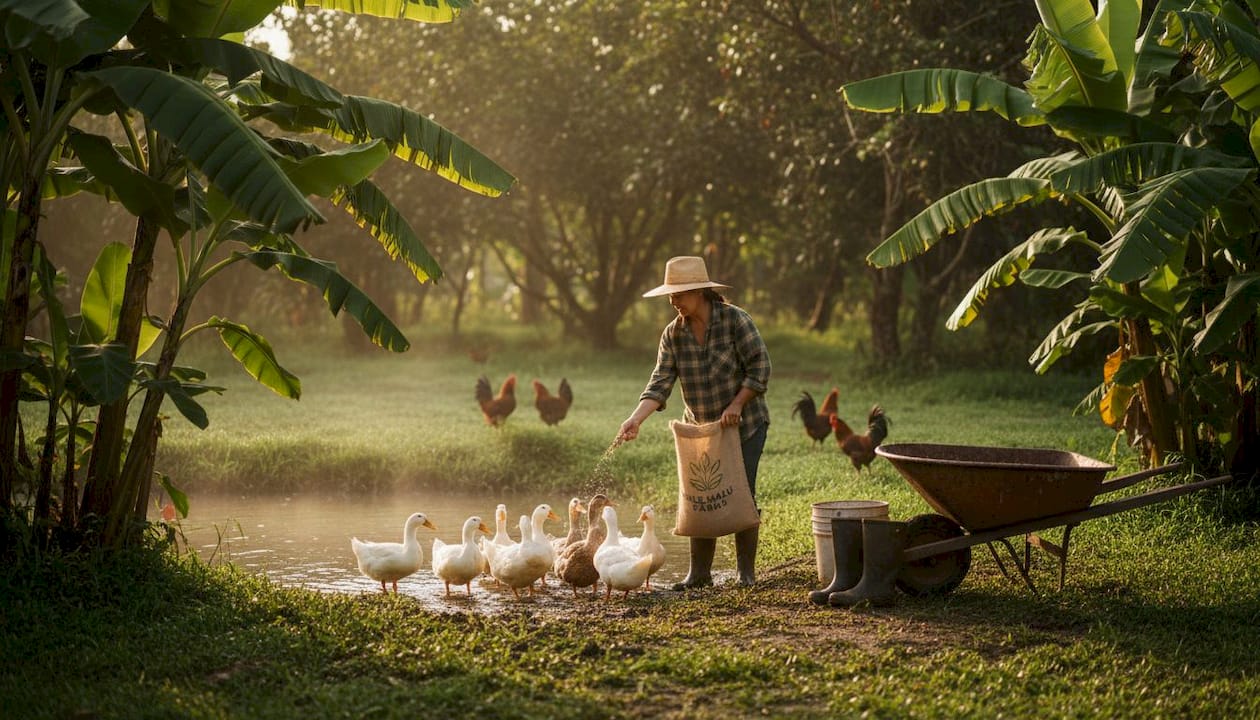
Ducks are one of the most productive and low-maintenance animals a homesteader can raise, delivering eggs, natural pest control, and soil fertility in a single flock. Understanding why homesteaders raise ducks comes down to one core fact: ducks offer multiple outputs from a single animal, making them ideal for small-scale, sustainable food systems. Unlike chickens, ducks forage without tearing up garden beds, tolerate wet and cold conditions with ease, and lay consistently through seasons when other poultry slow down. At Halemalufarms, we’ve watched homesteaders across Hawaiʻi discover that a small duck flock transforms how their land produces food.
Why homesteaders raise ducks for natural pest control
Ducks are the most effective natural slug and insect control tool available to homesteaders, and they do the job without destroying your garden in the process. The key difference between ducks and chickens in a garden setting comes down to foraging style. Chickens scratch aggressively, pulling up mulch, disturbing roots, and exposing soil. Ducks forage methodically in damp areas, nibbling slugs and insects from under leaves without the destructive scratching behavior.

The results from real farm trials back this up. A SARE-funded trial showed that 50 ducks rotated through mushroom yards produced almost zero slug damage and measurably better mushroom quality. That is not a minor improvement. It means ducks can replace chemical slug controls entirely on a well-managed homestead.
Here is how to integrate ducks safely into your garden:
- Rotate access in small sections. Let ducks into one bed at a time, then move them before they overwork the soil.
- Supervise early visits. Young ducks may nibble tender seedlings. Introduce them to mature plants first.
- Use temporary fencing. A simple portable fence keeps ducks focused on target areas.
- Time access after rain. Slugs surface after wet weather, which is exactly when duck foraging is most productive.
- Avoid muddy areas near water features. Concentrated duck traffic near standing water creates mud quickly.
Pro Tip: Start with a small test section of your garden before giving ducks full access. Watch how they interact with your specific plant varieties for two or three visits before expanding their range.
Integrated systems like rice-duck farming recommend stocking around 100 ducks per acre for effective pest and weed management. For a backyard homestead, even two or three ducks make a visible difference in slug populations within a single season.

Are ducks hardy enough for tough homestead climates?
Ducks are hardier birds than chickens in most challenging conditions, particularly in wet, cold, or waterlogged environments where chickens struggle. This hardiness is one of the top reasons homesteaders in rainy climates choose waterfowl over other poultry. Ducks have dense, waterproof feathering and a natural tolerance for cold that makes them far less vulnerable to respiratory illness from damp conditions.
Here is what that hardiness looks like in practice:
- Cold tolerance. Ducks remain active and productive in temperatures that would cause chickens to stop laying.
- Wet ground tolerance. Muddy, waterlogged runs that stress chickens are normal territory for ducks.
- Fewer respiratory issues. Ducks are generally less susceptible to the common respiratory illnesses that affect chicken flocks in humid climates.
- Lower heating requirements. Most duck breeds do not need a heated coop in mild-to-moderate winters, reducing your energy costs.
One common misconception holds back many aspiring duck keepers: the belief that you need a large pond. You do not. Ducks need clean water deep enough to submerge their heads for cleaning, which a simple bucket or small kiddie pool provides. This makes ducks feasible for urban homesteads and small lots where a natural water feature is not an option.
Pro Tip: Change your duck pool water every 3–5 days. The used water is nutrient-rich and works directly as liquid fertilizer on garden beds, so nothing goes to waste.
Managing water on a small homestead does require some planning. If you are working with limited water resources, rainwater harvesting strategies can help you maintain clean duck water without straining your supply.
How do duck eggs compare to chicken eggs for homesteaders?
Duck eggs are nutritionally richer than chicken eggs, with higher fat content, more protein per egg, and larger yolks that bakers prize for producing richer, fluffier results. For homesteaders focused on food self-sufficiency, that nutritional density matters. You get more from each egg.
Productivity is the other major factor. A six-duck flock can produce 4–5 eggs per day at peak season. Molting causes a temporary slowdown, but overall duck laying patterns tend to be more consistent than chickens as flocks age. Chickens often drop production sharply after their second year. Many duck breeds maintain strong laying rates well into their third and fourth years.
| Duck Breed | Primary Use | Average Annual Eggs | Notes |
|---|---|---|---|
| Khaki Campbell | Egg production | 280–340 | Top layer; calm temperament |
| Indian Runner | Egg production | 250–300 | Upright posture; active forager |
| Pekin | Meat and eggs | 150–200 | Fast growing; good dual-purpose bird |
| Muscovy | Meat and pest control | 60–120 | Quiet; excellent forager; no quack |
| Welsh Harlequin | Eggs and show | 240–330 | Calm; good for small homesteads |
Khaki Campbells and Indian Runners are the go-to choices for homesteaders who prioritize egg output. Muscovy ducks suit farms where pest control and meat production matter more than daily egg counts. Choosing the right breed for your goals is the single most important decision you make before starting your flock. Halemalufarms covers this in detail in our guide on ducks vs. chickens on Hawaiʻi farms.
How ducks support nutrient cycling on a sustainable homestead
Duck manure is one of the most nitrogen-rich poultry fertilizers available, and a small flock generates a steady supply that feeds your garden without any purchased inputs. This is the closed-loop benefit that permaculture designers value most about homesteading with waterfowl. Ducks eat, forage, and produce waste that directly feeds the soil that feeds them.
Here is how to build a simple nutrient cycle with your duck flock:
- Collect pool water every 3–5 days. Duck pool water is loaded with dissolved nutrients from manure and feed waste. Use it directly on established garden beds or fruit trees.
- Compost bedding material. Mix duck coop bedding with carbon-rich materials like straw or wood chips. Let it hot-compost for 60–90 days before applying to beds.
- Rotate ducks through fallow beds. Let ducks rest on empty garden sections between planting cycles. Their manure deposits directly into the soil, and their foraging clears weed seedlings.
- Apply finished compost before planting. Aged duck manure compost is safe for all vegetables and dramatically improves soil structure over time.
One important note: fresh duck manure is high in nitrogen and can burn plants if applied directly in large amounts. Composting or diluting it in water first protects your crops. Nutrient recovery from poultry manure depends on local soil type and climate, so observe how your specific garden responds and adjust application rates accordingly.
The multi-output model of raising ducks, balancing eggs, pest control, and manure production, is what makes them uniquely suited for homesteads aiming for genuine self-sufficiency. Local egg production also strengthens community food security, a point we explore further in our piece on why local eggs matter.
Ducks vs. chickens: space, housing, and daily management
Ducks require slightly more water management than chickens but significantly less coop infrastructure, and on a small homestead, that tradeoff often favors ducks. A 0.6-acre farm that switched from chickens to ducks reported less garden destruction, simpler daily care, and steadier egg production as the primary reasons for the change. That real-world experience reflects what many small-scale homesteaders discover.
| Factor | Ducks | Chickens |
|---|---|---|
| Coop requirements | Simple, draft-free shelter; no roosts needed | Roosts, nesting boxes, ventilation required |
| Water needs | Daily fresh water; pool changed every 3–5 days | Daily fresh water only |
| Garden impact | Low; forages without scratching | High; scratches and disturbs mulch |
| Cold hardiness | Strong; tolerates wet and cold well | Moderate; sensitive to damp conditions |
| Egg consistency | Steady through aging flock | Drops significantly after year two |
| Mud management | Requires attention near water areas | Minimal mud issues |
Duck housing does not need to be elaborate. A simple three-sided shelter with good drainage and predator protection covers their basic needs. They do not roost, so you skip the perch-building step entirely. The main management task is water. Ducks make a mess of their water quickly, so plan your setup so that draining and refilling is easy. Proper water self-sufficiency planning makes this routine far less burdensome on a small homestead.
For flock sizing, three to six ducks is the right starting range for most homesteaders. That number provides enough eggs for a household, enough pest control to make a difference, and a manageable workload for someone new to duck care. One critical nutrition note: ducklings need adequate niacin in their feed to develop properly. Standard chick starter is often too low in niacin for ducks. Use a waterfowl-specific starter or supplement with brewer’s yeast to avoid leg and developmental problems in young birds.
Key takeaways
Ducks are the most versatile small-flock animal for homesteaders, delivering eggs, pest control, and soil fertility from a single, hardy, low-infrastructure flock.
| Point | Details |
|---|---|
| Natural pest control | Ducks eliminate slugs and insects without scratching or damaging garden beds. |
| Hardy in tough climates | Ducks tolerate wet, cold conditions better than chickens and need no heated coop in mild winters. |
| Consistent egg production | Breeds like Khaki Campbell lay 280–340 eggs annually and maintain output as the flock ages. |
| Nutrient cycling | Duck pool water and composted manure feed garden beds, reducing or eliminating purchased fertilizer. |
| Simple housing needs | Ducks need a draft-free shelter and clean water; no roosts or complex coop builds required. |
What raising ducks taught me about homesteading
By kai
I’ll be honest: when I first started paying close attention to duck behavior on the farm, I expected them to be the messy, high-maintenance birds that their reputation suggested. What I found was almost the opposite.
The thing most new homesteaders miss is that ducks are systems animals. They do not just produce eggs. They clean your garden, fertilize your soil, and tell you a lot about the health of your land by where they choose to forage. A duck that keeps returning to the same corner of a bed is telling you there is a pest population there worth investigating.
The water management piece is real, and I will not pretend otherwise. You will deal with mud. You will refill pools more often than you expect. But once you build your setup with drainage in mind from the start, it becomes a ten-minute daily task, not a burden. The homesteaders who struggle with ducks are almost always the ones who set up their water station as an afterthought.
My honest advice for anyone starting out: choose your breed before you choose your coop design. A Muscovy and a Khaki Campbell have completely different space, water, and management needs. Getting that decision right first saves you from rebuilding your setup six months in.
Ducks reward patience and observation more than any other homestead animal I’ve worked with. Give them a well-designed space, the right nutrition, and access to forage, and they will give you more than you planned for.
— kai
Start your duck flock with Halemalufarms
Ready to add ducks to your homestead? Halemalufarms has been supporting Hawaiʻi homesteaders since 2011 with heritage poultry breeds selected for productivity, hardiness, and suitability to island conditions.

We carry heritage duck breeds suited for egg production, pest control, and dual-purpose homestead use, along with the feed and supplies your flock needs to thrive from day one. Our team understands the specific challenges of small-farm duck keeping, from niacin-balanced starter feeds to predator-resistant housing setups. Browse our full selection of poultry feed and supplies or explore our duck breeding programs to find the right birds for your goals. We are here to help you build a flock that works as hard as you do.
FAQ
Why do homesteaders prefer ducks over chickens?
Ducks cause less garden damage, tolerate wet and cold climates better, and maintain egg production longer as the flock ages. Many small-farm homesteaders find ducks easier to manage once their water setup is properly designed.
How many ducks do i need for a family homestead?
A flock of three to six ducks provides enough eggs for most households while keeping daily management simple. Khaki Campbells or Indian Runners are the best starting breeds for egg-focused homesteaders.
Do ducks really need a pond?
No. Ducks need clean water deep enough to submerge their heads for cleaning, which a bucket or small kiddie pool provides. A large pond is not required for healthy, productive ducks.
What do ducks eat on a homestead?
Ducks thrive on waterfowl-formulated feed supplemented with forage from garden areas. Ducklings specifically need adequate niacin in their starter feed to avoid developmental leg problems; brewer’s yeast added to standard chick starter works as a supplement.
How do ducks help with garden fertility?
Duck manure is nitrogen-rich and supports strong plant growth. Pool water changed every 3–5 days can be applied directly to garden beds as liquid fertilizer, creating a simple closed-loop nutrient cycle on your homestead.
Recommended
- Why ducks outperform chickens on Hawaiʻi farms – Your Local source for all things poultry
- The Role of Duck Breeding Programs in Sustainable Farming – Your Local source for all things poultry
- Why Egg Production Matters Locally: Community Benefits – Your Local source for all things poultry
Discover more from Your Local source for all things poultry
Subscribe to get the latest posts sent to your email.