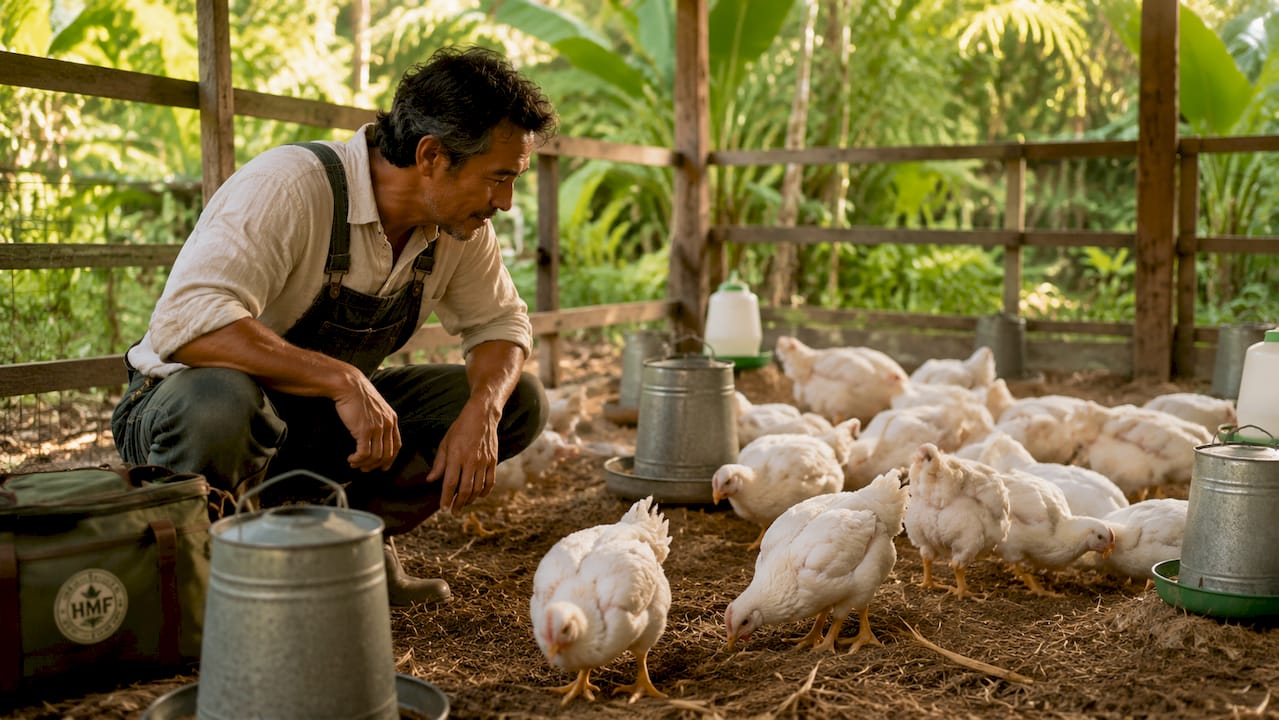
Feeding laying hens naturally means giving them nutrient-dense foods that match their biological needs for protein, calcium, and foraging. This approach, known in poultry nutrition as natural or whole-food feeding, produces stronger eggshells, healthier birds, and lower feed costs. The key is balance. You need a high-protein base, the right calcium source, and smart forage integration. At Halemalufarms, we have built our entire layer program around this principle, combining heritage genetics with regenerative feeding practices rooted in Hawaiian land stewardship.
What are the nutritional requirements for laying hens?
Laying hens need 16–18% protein in their daily diet to maintain consistent egg production. During molting, that number climbs to 20%. Protein drives feather regrowth and yolk development, so a shortfall shows up fast in dropped production rates.
Daily feed intake runs about 1/4 to 1/3 pound per hen. That sounds small, but every bite needs to count. Nutrient density matters far more than volume.
Two amino acids deserve special attention: methionine and lysine. Amino acid levels like these are the most overlooked factor in natural diets. Hens deficient in methionine lay fewer eggs and peck feathers. Deficient lysine reduces muscle and egg protein quality. Natural feeds like sunflower seeds and fish meal supply both.
Calcium is the other non-negotiable. Laying hens need 2–3g of calcium daily for strong eggshells. Crushed oyster shells or baked eggshells work best, offered free choice starting around 16–20 weeks of age.
Never mix calcium directly into the main feed. Calcium mixed into feed can cause kidney damage in roosters and young pullets who consume it without needing it. A separate free-choice calcium feeder protects your whole flock.
Key nutritional targets for laying hens:
- Protein: 16–18% daily, up to 20% during molt
- Calcium: 2–3g daily via free-choice oyster shell or eggshell
- Methionine and lysine: supplied through sunflower seeds, fish meal, or legumes
- Energy: cracked corn, oats, and wheat provide steady caloric base
- Grit: insoluble granite grit aids digestion of whole grains and forage
Pro Tip: Offer oyster shell and grit in two separate small feeders mounted to the coop wall. Hens self-regulate intake, which prevents both deficiency and overdose.
How do you safely add garden and forage foods to a natural diet?
Garden produce and forage plants are the most cost-effective way to enrich a natural feeding program. Supplementing with garden produce and insects can reduce commercial feed costs by 10–20%. That saving adds up fast across a flock of 20 or more birds.
The best garden foods for laying hens include:
- Leafy greens: kale, Swiss chard, lettuce, and spinach boost carotenoids for deep orange yolks
- Squash and cucumbers: high water content, easy to digest, and hens love the seeds
- Berries: blueberries, strawberries, and mulberries provide antioxidants
- Herbs: oregano acts as a natural antimicrobial; basil supports respiratory health
Beyond the garden bed, dedicated forage plants create a living system for your flock. Comfrey regrows after cutting and delivers deep-rooted minerals. Sunflowers produce high-fat seeds that support feather condition. Nettles are the standout performer. Dried nettle leaf contains up to 25–30% crude protein, plus iron and essential minerals. Use only the leaf mass. Stalks reduce the nutritional benefit significantly.
Including 5–10% nettle in the diet sustains laying rates of 80–88% and improves fecal consistency. That is a meaningful performance metric for any small flock operation.

Insects and larvae round out the protein picture. Black soldier fly larvae are particularly rich in fat and protein. Mealworms work well as a training treat and protein boost during molt. You can raise both at home with minimal space.
Some plants are toxic and must stay out of the run entirely:
- Raw potatoes and green potato skins (solanine poisoning)
- Avocado flesh and skin (persin toxicity)
- Rhubarb leaves (oxalic acid)
- Dried or raw beans (phytohaemagglutinin)
Pro Tip: Plant a dedicated forage strip along your fence line with comfrey, nettles, and sunflowers. Harvest and dry in bulk during summer to fill winter feed gaps when garden produce is scarce.
For more ideas on using farm-grown produce to enrich your hens’ diet, Halemalufarms has a practical guide worth bookmarking.
How do you create a balanced homemade feed mix for laying hens?
A well-built homemade mix gives you full control over ingredient quality and cost. The goal is to hit protein, energy, and mineral targets without relying on a single commercial bag.

Here is a working base recipe by weight percentage:
| Ingredient | Percentage | Purpose |
|---|---|---|
| Wheat (whole or cracked) | 30% | Energy and B vitamins |
| Cracked corn | 20% | Energy and palatability |
| Field peas or lentils | 20% | Plant-based protein and lysine |
| Oats | 10% | Fiber and slow-release energy |
| Sunflower seeds | 8% | Fat, methionine, and vitamin E |
| Fish meal | 7% | High-quality complete protein |
| Alfalfa meal | 3% | Calcium, vitamins A and K |
| Kelp meal | 2% | Iodine, trace minerals, thyroid support |
This blend targets roughly 16–17% crude protein, which meets the industry standard for layers. Adjust fish meal upward to 10–12% during molt to push protein toward 20%.
Follow these steps when mixing and storing your feed:
- Measure by weight, not volume. A cup of fish meal weighs far more than a cup of oats. Weight-based measuring keeps your protein percentage accurate.
- Mix in small batches. Prepare no more than a two-week supply at a time to preserve freshness and prevent mold.
- Store in airtight containers. Food-grade buckets with gamma-seal lids protect against moisture and rodents.
- Keep storage cool and dark. Heat and light degrade vitamins, especially A, D, and E.
- Offer oyster shell and grit separately. Never fold calcium into the mix itself.
- Supplement with commercial feed if needed. A 90/10 feeding rule (90% complete feed, 10% natural supplements) keeps amino acid and mineral intake consistent during peak laying.
The 90/10 rule is worth taking seriously. A fully homemade diet can work, but it requires precise sourcing and regular testing. For most backyard keepers, blending your own mix with a quality commercial base gives you the best of both approaches.
Seasonal adjustments matter too. In cooler months, increase cracked corn slightly for extra calories. During molt, pull corn back and raise fish meal or peas to support feather regrowth protein demands. You can explore sustainable egg production practices that pair well with this kind of seasonal feed management.
How do management practices affect natural feeding success?
Feed quality alone does not determine laying performance. Management practices like clean water, dry housing, and feeding timing consistently outweigh feed composition in their impact on egg production. That is a fact many keepers underestimate.
Clean, fresh water must be available at all times. Hens drink roughly twice as much water as they eat by weight. A hen without water for even a few hours will drop production noticeably. Nipple drinkers reduce contamination compared to open troughs.
Feeding schedule and environment also shape how well hens absorb what you give them:
- Feed twice daily: morning and evening feeding encourages consistent intake and reduces waste
- Keep feeders clean and dry: wet feed molds quickly and causes respiratory illness
- Maintain dry bedding: damp litter breeds bacteria that stress the immune system
- Reduce crowding: stressed hens eat less and lay fewer eggs regardless of feed quality
- Monitor flock behavior daily: a hen standing apart or showing dull eyes signals a health issue before it becomes a flock problem
Stress is the silent feed thief. A hen under social stress from overcrowding or predator pressure diverts energy away from egg production and toward survival. No feed formula compensates for a poorly managed environment.
Pro Tip: Check feeders and waterers every morning before you do anything else. Your eyes are your best tool. Catching a blocked nipple drinker or moldy feeder early saves production and prevents illness.
Halemalufarms integrates these management principles across its layer systems, including its planned 5,000-layer egg barn, where feeding routines and housing conditions are designed together rather than treated as separate concerns.
Key Takeaways
Feeding laying hens naturally requires a balanced protein base of 16–18%, free-choice calcium, dedicated forage plants, and consistent management practices working together.
| Point | Details |
|---|---|
| Protein targets matter | Keep daily feed at 16–18% protein; raise to 20% during molt for feather regrowth. |
| Calcium stays separate | Offer oyster shell free choice to prevent kidney damage in non-laying birds. |
| Forage cuts costs | Garden produce and insects can reduce commercial feed costs by 10–20%. |
| Homemade mixes need weight measuring | Measure ingredients by weight to hit accurate protein percentages every batch. |
| Management drives results | Clean water, dry housing, and feeding routines affect production more than feed tweaks alone. |
What I have learned from years of natural feeding
The biggest mistake I see is treating natural feeding as subtraction. Farmers pull out the commercial pellet bag and assume the hens will thrive on scraps and scratch. They do not. Natural feeding is addition. You are adding nutrient density, ingredient quality, and biological variety to a solid nutritional foundation.
The living system approach changed how I think about feed entirely. Once I planted a dedicated forage strip with comfrey, nettles, and sunflowers, I stopped thinking about feed as something I buy and started thinking about it as something I grow. That shift in mindset is practical, not philosophical. Dried nettles in winter cost almost nothing when you harvest and dry them in summer.
The amino acid piece is where I see the most silent failures. A flock can look healthy and still be underperforming because methionine is low. You will not see it in feathers or behavior right away. You will see it in a gradual drop in lay rate over weeks. If your hens are eating well but production is slipping, check your protein sources before you change anything else.
My honest recommendation: do not go fully homemade unless you can test your mix or source from a trusted supplier. The 90/10 rule is not a compromise. It is a smart hedge that keeps your flock performing while you refine your natural system over time. Pair that with a good forage patch, free-choice oyster shell, and clean water, and you will have a flock that lays well and stays healthy without a bag of mystery pellets running the show.
— kai
Halemalufarms resources for natural layer feeding
Halemalufarms has been building sustainable poultry systems on Hawaiʻi Island since 2011, combining heritage genetics with regenerative feeding practices. Whether you are setting up your first backyard flock or scaling toward a commercial layer operation, the resources and layer hen breeds available through Halemalufarms are selected specifically for natural diet adaptability and production resilience.

The Halemalufarms feed and supplies catalog includes natural feeding options suited to small flocks and larger operations alike. If you are ready to build a feeding program grounded in heritage genetics and sustainable practice, the heritage poultry breeding guide is the best place to start. It walks you through breed selection, feed planning, and the management systems that make natural feeding work long term.
FAQ
What protein percentage does a laying hen need daily?
Laying hens need feed with 16–18% protein for consistent egg production. During molt, increase protein to 20% to support feather regrowth.
Can I feed laying hens only garden scraps and forage?
Garden scraps and forage alone do not meet all nutritional needs. A 90/10 approach (90% complete feed, 10% natural supplements) keeps amino acid and mineral intake balanced during peak laying.
Why should calcium be offered separately from main feed?
Mixing calcium into main feed risks kidney damage in roosters and young pullets who do not need high calcium intake. A free-choice oyster shell feeder lets each bird self-regulate.
What are the best plants to grow for natural hen feed?
Comfrey, nettles, and sunflowers are the top three. Dried nettle leaf reaches up to 25–30% crude protein and sustains laying rates of 80–88% when included at 5–10% of the diet.
How much feed does a laying hen eat per day?
A laying hen eats about 1/4 to 1/3 pound of feed daily. Every bite needs to deliver balanced nutrition, so ingredient quality and protein density matter more than volume.
Recommended
- Why Backyard Chickens Improve Eggs: a Homeowner’s Guide
- Common Mistakes Buying Fertile Eggs for Your Homestead
- Build an Automated Egg Barn for Your Small Farm
- Why Egg Production Matters Locally: Community Benefits – Your Local source for all things poultry
Discover more from Your Local source for all things poultry
Subscribe to get the latest posts sent to your email.