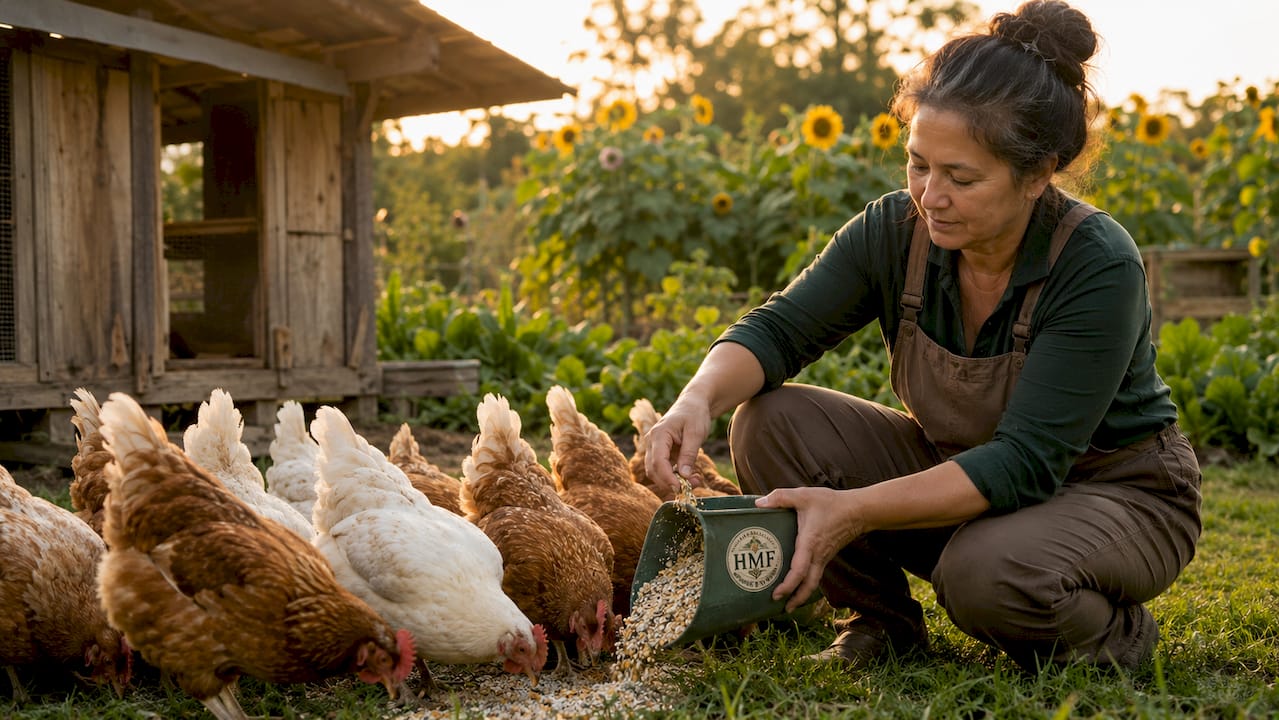
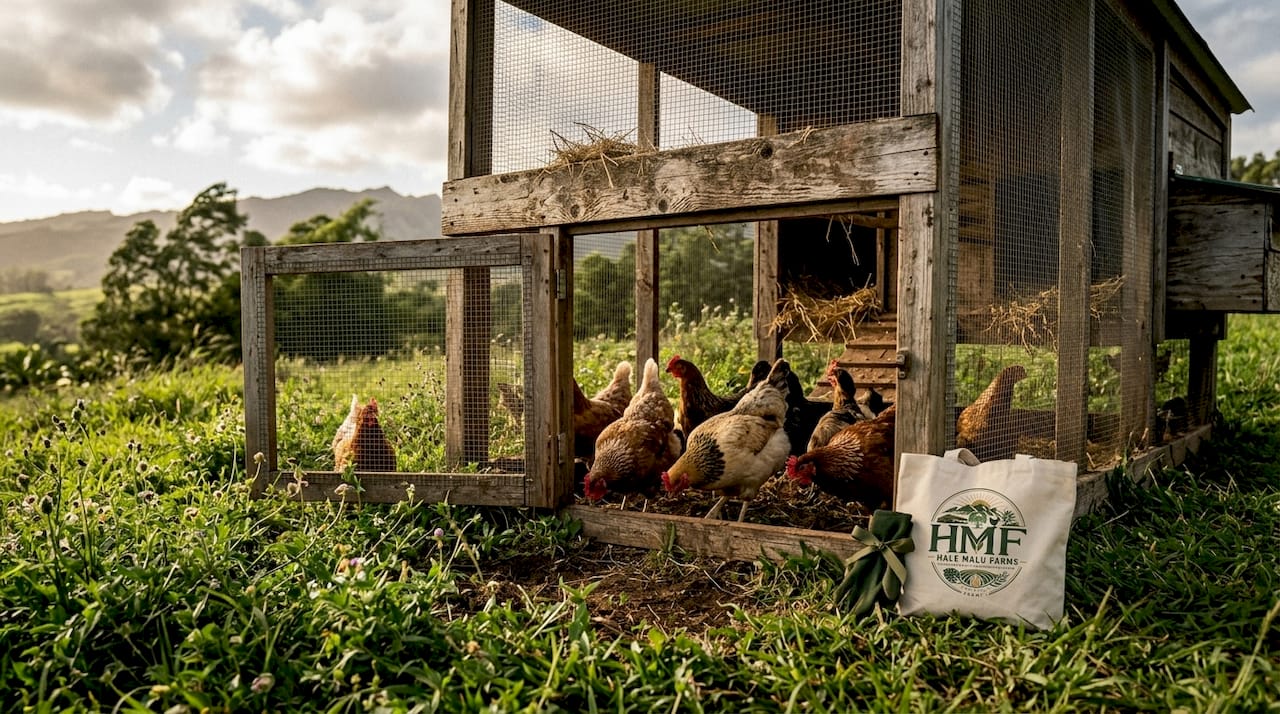
Finding a poultry hatchery service that combines live chick shipping, breed variety, reliable supply, and local support is time-consuming and often stressful. Many services limit shipping to specific areas, restrict heritage breeds, or force small farms to coordinate with several suppliers for chicks and equipment. This comparison highlights pricing, shipping coverage, and breed focus for five poultry hatchery services so you can pick one that fits your farm’s needs best.
Table of Contents
- Hale Malu Farms
- Murray McMurray Hatchery
- Cackle Hatchery
- Welp Hatchery
- Farmbrite
- Comparison of Alternatives
Hale Malu Farms

At a Glance
Island-wide pickup and shipping across Hawaiʻi and the South Pacific supports backyard keepers and small farms. The hatchery has raised heritage chickens, ducks, geese, turkeys, and quail since 2011. It pairs bird sales with supplies and local education to help growers establish resilient flocks.
Core Features
Hale Malu Farms runs hatchery services offering breed-specific poultry and fertile eggs, plus island-wide pickup and shipping for customers across Hawaiʻi and nearby islands. The operation stocks farm supplies such as incubators, feeders, and waterers, and it keeps a public hatch calendar to time orders. A steady focus on heritage breeds and sustainable husbandry informs breeding choices and customer advice.
Key Differentiator
Local sourcing that matches heritage genetics to island conditions sets Hale Malu Farms apart. That local focus reduces stressors common to shipped stock and supports food security within Hawaiʻi. The service prioritizes breeds that perform well in tropical and cool highland microclimates.
Pros
Specialization in heritage breeds produces birds known for hardiness and strong flavor, which suits homestead egg and meat aims. A clear Hawaiʻi focus means delivery options and care guidance tailored to island logistics and biosecurity needs. The farm also offers a broad selection of poultry ages and types alongside incubators and basic supplies, so small farms can order birds and equipment from a single source.
Cons
- Primarily serves Hawaiʻi and nearby regions, making international shipping difficult.
Who It’s For
This service fits Hawaiʻi-based small farmers, homesteaders, and backyard poultry enthusiasts who value heritage genetics and local sourcing. Educational groups and 4-H projects in the islands will find the hatch calendar and workshops useful. Commercial breeders needing large, global-scale distribution may find the geographic limits restrictive.
Unique Value Proposition
Island-centered hatchery plus local supply distribution removes many logistics headaches for Hawaiʻi growers. Farmers can buy chicks, hatching eggs, and incubator hardware in a single order while relying on pickup or island shipping. That setup reduces time chasing multiple vendors and helps keep stock suited to local climates.
Real World Use Case
A small farmer on Hawaiʻi orders a mixed batch of heritage chicks and a starter incubator, chooses island pickup, and receives timing notes from the hatch calendar. The farmer uses the farm supplies to hatch additional eggs and attends a local workshop to learn brood care. The combined support helps the grower expand a healthy, locally adapted flock.
Pricing
Prices vary by breed and product. Chicks generally list at $8–$12, and ducklings show at $12–$29. The farm lists hatching egg packages and incubator units; one reference price shows hatching eggs at $1,999 per incubator. Shipping and supply prices vary by island and item; detailed pricing appears on the website.
Website: https://halemalufarms.com
Murray McMurray Hatchery

At a Glance
Murray McMurray Hatchery reports 90% sexing accuracy on shipped poultry. The company traces a long standing pedigree that spans more than a century. It ships many common, rare, and heritage breeds and offers a full set of supplies and guides for new and experienced keepers.
Core Features
The catalog pairs a wide breed selection with an online ordering system that calculates shipping by weight and supports customer accounts. The company offers a live arrival guarantee, incubators, coops, feed, and educational books to guide care and showing. Shipping options and seasonal availability appear on the site.
Key Differentiator
Centuries of practical hatchery experience combine with explicit guarantees on live poultry health and sexing accuracy. That history shows up in breed depth and in the range of supplies offered. For buyers who want heritage genetics plus written shipping promises, this angle is distinctive.
Pros
A family operation with a long standing reputation brings institutional knowledge to breed selection and care guidance. The catalog includes many heritage and rare varieties, and the supply store covers incubators, feeders, and show supplies in one place. Customer support and satisfaction guarantees back live shipments, and the site’s educational materials help first timers raise healthy birds. That accuracy claim on sexing and the live arrival promise reduce risk for buyers ordering by mail.
Cons
- Primarily focused on the US, with limited international shipping options that complicate cross border orders.
- Rare and specialized breeds often carry higher price tags than common chicks.
- Live shipment success can depend on weather, which affects delivery windows and guarantees.
When It May Not Fit
If you live outside the United States and need regular international shipments, this hatchery will be a poor logistical fit. If you require the lowest possible price for large commercial flocks, hobby scale pricing and breed premiums may not match your budget. If you need guaranteed weatherproof delivery windows in every season, the vendor’s shipping constraints could be restrictive.
Who It’s For
Home hobbyists, small farmers, and 4-H or school programs in the United States who want a broad breed selection and hands on guidance. Breeders preparing birds for shows who value breed variety and care materials will find the offering useful. Buyers who prefer a single-source shop for chicks and supplies benefit most.
Real World Use Case
A hobbyist orders an assorted starter pack of chicks, an economy incubator, and a care guide from the online catalog. They set up a brooder, follow the printed care steps, and buy a feeder and waterer from the same shipment. Later the keeper uses the company’s showing guide when entering a local poultry exhibition.
Pricing
Chick prices range from $3 to $25 depending on breed and age, with bulk discounts and seasonal sales. Shipping cost depends on order weight and destination, and free shipping appears for some large orders within certain regions.
Website: https://mcmurrayhatchery.com
Cackle Hatchery

At a Glance
Cackle Hatchery reports over 230 varieties of purebred poultry. The company also reports it has operated since 1936 and ships across the United States. Seasonal chick and hatching egg shipments run primarily from February to October, making spring the busiest ordering window.
Core Features
Cackle focuses on a wide breed catalog with heritage and purebred lines and a tools section that covers incubators, feeders, and coop gear. The hatchery runs seasonal chick and egg shipping and offers breed finder tools and step by step chick care guidance. The site mixes sales of live poultry with supplies and educational content for new keepers.
Key Differentiator
The hatchery centers its reputation on long term breed preservation and genetics focused breeding practices. That emphasis appeals to people who want traceable bloodlines and heritage traits rather than commodity stock. The seller history and breed depth give collectors and specialty growers a clear reason to choose Cackle for rare lines.
Pros
A long family owned history brings continuity in breeding methods and customer relationships, which many poultry keepers value. The large breed selection serves both hobbyists and small farms, and the educational resources shorten the learning curve for first time chick raisers. Nationwide shipping and bundled supply options let people order day old chicks, hatching eggs, and gear from one source.
Cons
- Limited to the US market, so international buyers cannot order live poultry or many eggs.
- Chick availability follows a seasonal pattern from February to October, so some breeds are not available year round.
- Focused strictly on poultry and related supplies, with no livestock categories beyond birds.
- Pricing for rare heritage birds trends higher than commodity hatcheries, which raises startup costs for budget buyers.
When It May Not Fit
If you need year round access to specific breeds, the seasonal availability will frustrate planning. Buyers outside the United States cannot obtain live shipments and must look for local sources. If your farm needs other livestock classes the poultry only catalog leaves gaps in your sourcing plan.
Who It’s For
This hatchery fits U.S. hobby poultry keepers, backyard farmers, and programs such as 4 H or school farms seeking heritage and specialty breeds. It also suits collectors who want rare lines and small farms focused on genetic quality. New keepers benefit from the step by step care guides and bundled supply offerings.
Real World Use Case
A small farm orders a mix of heritage chickens and waterfowl in early spring, selects an incubator and brooder kit from the supply section, and follows the hatchery care sheets while brooding chicks. The farm uses the breed finder to match temperament to pasture plans and stages the pullets for egg production the following season. That combination of stock plus supplies simplifies the setup work for a single seasonal purchase.
Pricing
Prices vary by breed and category, starting as low as $3 for some adult fowl and rising to over $200 for specialty offerings and hatchery surprises. The hatchery runs season dependent pricing for chicks and eggs and advertises free shipping on supplies and select specials.
Website: https://cacklehatchery.com
Welp Hatchery

At a Glance
Established in 1929, Welp Hatchery traces nearly a century of poultry breeding from Bancroft, Iowa. The operation specializes in Cornish Rock broilers and sells a wide catalog of pullets, broilers, and heritage birds. Customers cite fast, safe shipping to U.S. addresses and practical husbandry guides.
Core Features
Welp offers a broad selection of poultry breeds, from meat type Cornish Rock to egg layers and heritage stock, all sourced from established breeders. The hatchery emphasizes fast-growing Cornish Rock broilers, weekly shipping schedules, and optional health treatments such as Marek’s immunization. The site also publishes health and predator guides to support on-farm husbandry.
Key Differentiator
Welp pairs its long standing lineage in poultry care with a catalog that serves both commercial producers and backyard keepers. The combination of nearly a century of experience and a reputation for reliable, speedy shipping within the United States sets it apart from newer hatcheries.
Pros
Decades of recorded experience give Welp credibility for breeders and meat producers who need consistent stock. Its Cornish Rock focus helps farmers who want fast growing broilers for meat production. The catalog covers layers and heritage breeds, so hobbyists can source pullets and breeding stock in one place. Shipping is organized weekly and described as fast and safe, which reduces stress on birds during transit. Educational resources and care guides help first time keepers learn routine health checks and predator prevention.
Cons
-
Limited international shipping. Welp ships primarily within the United States, which rules out most overseas buyers.
-
Narrow product scope. The company focuses on poultry breeds and related supplies, not a full farm supply inventory.
-
Higher price points. Prices trend above commodity chicks, which may push small scale or budget buyers to other suppliers.
When It May Not Fit
If you need equipment beyond poultry supplies, Welp is not a one stop farm shop. Buyers outside the United States should look for domestic distributors because international shipping options are limited. If your operation competes on minimal chick cost per unit, the higher price points here may not match your budget needs.
Who It’s For
You are a U.S. based poultry farmer, homesteader, or educator who values breed consistency and practical support. Commercial broiler producers who prioritize growth rate and reliable weekly delivery will find the Cornish Rock lines useful. Backyard keepers who want pullets, heritage breeds, and clear care guidance will appreciate the catalog and resources.
Real World Use Case
A hobbyist in Iowa ordered Amberlink pullets and a few male breeders to start a small flock. They scheduled spring delivery, selected Marek’s immunization, and received healthy birds at the farm. The buyer used Welp’s guides to set up a brooder and predator defenses, then kept eggs for household use and breeding stock for expansion.
Pricing
Most poultry and breed prices range from $2.75 to $6.55 per bird, with extra charges for services such as Marek’s immunization or coccidiosis spray. Shipping runs on a weekly schedule and may require minimum order quantities depending on route and season.
Website: https://welphatchery.com
Farmbrite

At a Glance
Starting at $29/month, Farmbrite offers tiered plans up to $109/month and custom enterprise solutions. The platform ties together task management, livestock and crop records, accounting, and eCommerce in one place. Those pricing figures show where small operations and larger farms enter the product ecosystem.
Core Features
Farmbrite centralizes task and work management alongside farm accounting and bookkeeping, so teams can log labor, sales, and expenses in one ledger. The service also tracks livestock health and breeding, supports crop planning, and manages inputs with capacity forecasting and inventory alerts. Resource tracking includes receipt scanning with OCR, equipment utilization, and lot level control.
Key Differentiator
Farmbrite targets diverse multi species farms with a single product that spans animals, crops, and direct sales. The interface groups records by enterprise so a ranch and a market garden can share one account without losing clarity. The product was built by farmers for farmers, which shows in field oriented terminology and record layouts.
Pros
The platform reduces the need for many separate tools by covering accounting, mapping, weather, sales, and animal records in one place. Farmbrite has a user friendly interface that most teams adopt quickly, and community success stories back up practical workflows. Farmbrite’s marketing materials state integration with Zapier for over 5,000 apps, and the product also exposes an API for custom connections.
Cons
-
Subscription pricing may be costly for very small or hobby farms. Many tiny operations prefer one time purchases.
-
Advanced capabilities can feel complex for users who lack onboarding or a dedicated administrator. That complexity raises the learning curve.
-
The vendor lists limited specifics about deep customization for highly diversified enterprises. Large operations may need custom work.
When It May Not Fit
Operators working off grid without reliable internet will find full functionality limited. The product requires an internet connection for cloud features and syncing. Farms that need an out of the box minimal record keeper may prefer simpler tools.
Notable Integrations
-
Zapier for connections to many third party apps.
-
API for custom integrations and webhooks.
-
RFID/EID scanners and other farm specific hardware support.
Who It’s For
Farmers and ranchers running mixed enterprises who want a single management account for animals, crops, and direct sales will get the most from Farmbrite. The product fits operations that can assign time to set up workflows and training. Small to mid sized commercial farms will find the feature depth appropriate.
Real World Use Case
A biodiverse farm plans crop rotations, logs animal health events, forecasts feed and seed needs, and posts products to a storefront from the same dashboard. Team members record field tasks and expenses on mobile devices. That workflow reduces duplicate data entry and tightens inventory control.
Pricing
Plans start at $29/month for essential features, rise to $109/month for advanced plans, and the vendor offers custom enterprise pricing. Add ons and integrations may change monthly costs depending on selected services.
Website: https://farmbrite.com
Comparison of Alternatives
Hale Malu Farms stands out for farmers in Hawai’i by offering tailored genetic and logistical solutions, making it a premier regional hatchery. Competitors also exhibit noteworthy strengths, such as Murray McMurray Hatchery’s educational resources, creating a range of options suited to various grower needs.
Tropical Compatibility
Hale Malu Farms excels in providing breeds specifically selected to thrive in tropical climates, ensuring high survival rates and productivity in diverse microclimates. Its regional focus enables fast, efficient logistics for Pacific Island farmers. In contrast, competitors, while offering broad variety, may not optimally address tropical requirements.
Educational Depth
Murray McMurray Hatchery leads in educational resources, offering printed guides and historical insights backed by its long-standing pedigree. This focus empowers beginning growers with practical knowledge and confidence, making it a preferred choice for thorough breed and care understanding. Hale Malu Farms, while strong in practical workshop offerings, provides less written material targeting these needs.
Best Fit
- Farmers in Hawai’i needing tropical breeds will benefit most from Hale Malu Farms, which matches genetic traits and transportation to island logistics.
- Growers prioritizing detailed educational resources should consider Murray McMurray Hatchery for its customer guides and expertise.
- Hobbyists searching rare breeds can rely on Cackle Hatchery’s extensive catalog of heritage and purebred lines.
- Broiler meat producers in the continental U.S. may find Welp Hatchery advantageous thanks to its emphasis on consistent Cornish Rock broiler availability.
Our Pick
Hale Malu Farms is recommended for growers in Hawai’i aiming to initiate or expand locally adapted poultry farming. Its focus on regional breed and logistical compatibility uniquely benefit Pacific Island conditions, though other U.S. hatcheries offer competitive advantages in breed variety and training depth.
Island poultry farmers seeking tailored heritage breeds and supplies may compare these leading hatchery services to find the best match for their needs.
| Hatchery | Core Feature | Key Differentiator | Pricing | Notable Limitation |
|---|---|---|---|---|
| Halemalufarms | Breed-specific poultry and island-wide shipping | Suited to Hawaiian climates and logistics | Chicks $8–$12; Ducklings $12–$29 | Limited to Hawaiʻi and nearby islands |
| Murray McMurray Hatchery | Broad breed selection with live arrival guarantee | 90% sexing accuracy with century-long pedigree | Chicks $3–$25 depending on breed | Limited international shipping |
| Cackle Hatchery | Over 230 purebred poultry varieties | Focus on breed preservation and genetic quality | Chicks $3–$200 depending on breed | Seasonal availability from February to October |
| Welp Hatchery | Specializes in Cornish Rock broilers | Nearly a century of breeding experience | $2.75–$6.55 per bird | Primarily ships within the U.S. |
Facing Challenges Finding the Right Poultry Supplier in Hawaiʻi?
Choosing a poultry source that fits island conditions and offers heritage breeds is key for Hawaiʻi-based small farmers, homesteaders, and backyard enthusiasts. Halemalufarms provides a trusted, local hatchery option focused on sustainable breeding, resilient flocks, and supplies tailored for Hawaiian agriculture. Their combination of heritage genetics and island-wide shipping makes poultry care easier and more reliable.

Visit HMF-HATCHERY – Your Local source for all things poultry to find heritage chicks and quality supplies. Ready to build a healthy, locally adapted flock with expert support? Go to Halemalufarms home page and start your order today.
FAQ
What makes Halemalufarms suitable for backyard poultry keepers?
Halemalufarms specializes in heritage breeds, which are known for their hardiness and suitability for tropical conditions. The farm’s focus on local sourcing helps reduce common stressors experienced by shipped stock and supports food security within Hawaiʻi. Backyard poultry keepers can expect to find a variety of well-adapted birds for their flocks.
How does Halemalufarms compare to Murray McMurray Hatchery regarding breed selection?
Murray McMurray Hatchery offers a wide variety of common, rare, and heritage breeds, making it a strong choice for those seeking a broad selection. Halemalufarms, while also focusing on heritage breeds, is particularly suited for backyard poultry enthusiasts in Hawaiʻi, offering birds that thrive in the island’s specific climates. This makes Halemalufarms the ideal choice for local growers.
What pricing should I expect when purchasing chicks from Halemalufarms?
Chicks from Halemalufarms generally range from $8 to $12, depending on the breed. This transparent pricing structure allows customers to budget effectively, especially those looking to start or expand their backyard flocks.
Can Halemalufarms help with educational resources for new poultry keepers?
Yes, Halemalufarms provides local education to help growers establish resilient flocks. New poultry keepers can benefit from workshops and guidance on best practices for health and care.
What is the primary focus of Halemalufarms?
Halemalufarms is dedicated to raising heritage chickens, ducks, geese, turkeys, and quail, with a steady emphasis on sustainable husbandry practices. This focus supports both resilience in the birds and the needs of local farmers.
Recommended
- Top 6 Heritage Poultry Farm Alternatives 2026
- Top 3 Quail Products for 2026 – Your Local source for all things poultry
- Top 4 Surehatch Incubators Alternatives 2026 – Your Local source for all things poultry
Discover more from Your Local source for all things poultry
Subscribe to get the latest posts sent to your email.