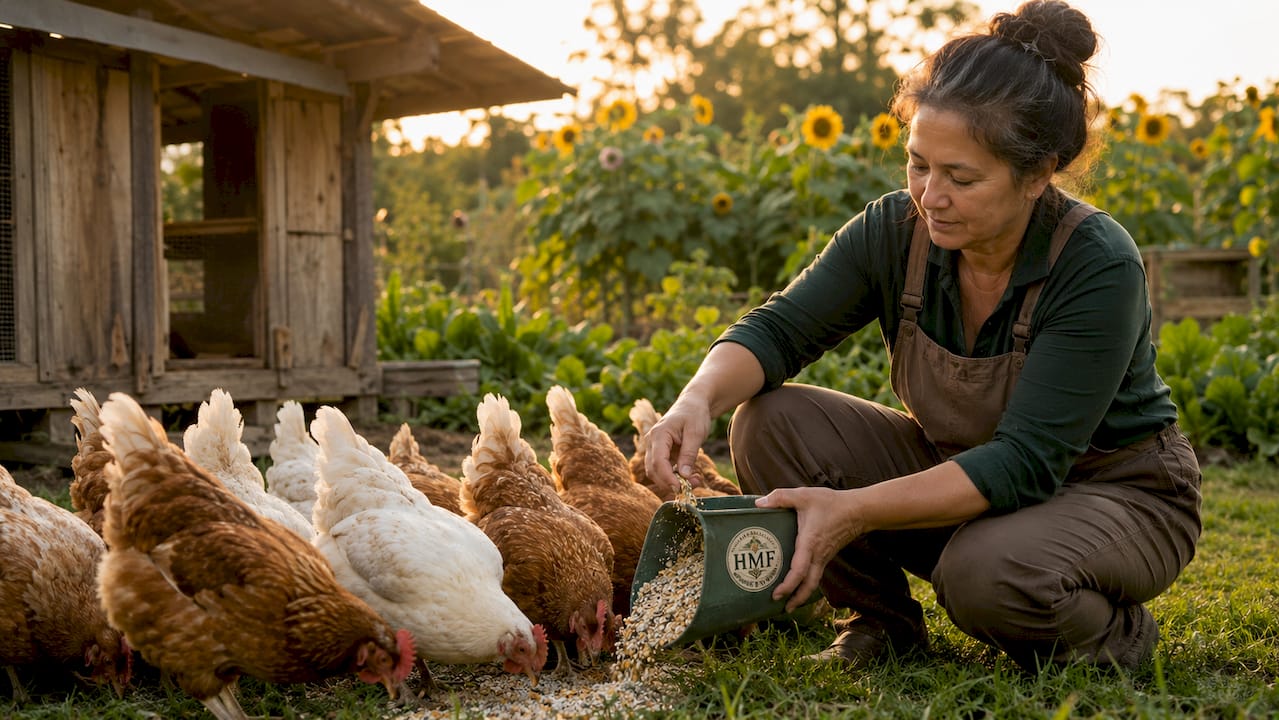
A backyard egg production setup is a home-scale poultry system designed to produce fresh eggs using a small flock of laying hens. The best examples of backyard egg production setups share four core elements: adequate space, resilient breed selection, functional coop design, and consistent flock management. Industry standards set the minimum at 4 square feet of indoor space and 10 square feet of outdoor run per hen. These numbers are not suggestions. They directly affect egg output, bird health, and how long your flock stays productive. Whether you have a small suburban lot or a half-acre homestead, the right setup makes the difference between a thriving flock and a frustrating first year.
1. What are common types of backyard chicken coops and housing designs?
Coop design is the foundation of any successful home egg production system. The two most common structures are fixed permanent coops and mobile coops, also called chicken tractors. Each serves a different management style and property size.
Fixed permanent coops suit flocks of 6 or more birds on larger lots. They offer more interior space, better insulation, and easier integration of automatic features like doors and feeders. The trade-off is that the ground beneath the attached run degrades quickly without rotation.

Mobile coops or chicken tractors solve that problem directly. Rotating mobile coops through garden beds improves soil fertility, controls pests, and gives hens fresh forage. This makes them ideal for small-scale sustainable setups where land health matters as much as egg count.
Key design elements every coop needs:
- Ventilation: Cross-ventilation at the roofline prevents moisture buildup and respiratory illness.
- Nesting boxes: Provide one box per 4 hens. More boxes waste space; fewer cause competition and broken eggs.
- Roosting bars: Place bars higher than nesting boxes so hens sleep on the bars, not in the nests.
- Litter trays: Slide-out trays under roosting bars cut cleaning time significantly.
- Hardware cloth: Use 1/2-inch mesh on all openings. Standard chicken wire does not stop determined predators.
Effective coop design centers on ventilation, accessible nesting boxes, and easy-to-clean litter trays to reduce maintenance labor. Maintenance burden is the top reason backyard chicken keepers quit after the first year. Build for ease from day one.
Pro Tip: Face the coop door and main windows south or southeast. This maximizes winter light exposure and keeps the interior warmer during cold months without extra heating costs.
2. Which chicken breeds are best suited for backyard egg production setups?
Breed selection determines how well your flock handles weather, stress, and seasonal changes. Heritage breeds like Rhode Island Reds, Australorps, and Plymouth Rocks outperform commercial hybrids in backyard settings because they combine solid egg output with long-term health and foraging ability.
Commercial hybrids are bred for maximum production in controlled environments. They often burn out faster and struggle with the variable conditions of a backyard setup. Heritage breeds live longer, forage better, and stay productive across multiple seasons.
A healthy laying hen produces roughly 250–300 eggs per year during peak seasons. That output drops during winter and molting, but hardy breeds recover faster and maintain more consistent annual totals.
| Breed | Annual eggs | Temperament | Best for |
|---|---|---|---|
| Rhode Island Red | 250–300 | Calm, curious | All-around backyard layer |
| Australorp | 250–300 | Gentle, quiet | Families with children |
| Plymouth Rock | 200–280 | Friendly, cold-hardy | Northern climates |
| Easter Egger | 200–280 | Active, friendly | Colorful egg variety |
Beginners should prioritize adaptability and longevity over maximum output. A hen that lays 260 eggs a year for four years gives you more value than one that lays 300 eggs for 18 months and then declines. For low-maintenance breed options, Halemalufarms has a helpful breakdown worth reading before you order.
3. How to optimize space and predator protection in your setup
Space and security are the two most overlooked factors in backyard poultry systems. Get them wrong and you lose eggs, birds, or both.
The minimum coop and run space of 4 square feet indoors and 10 square feet outdoors per hen is a floor, not a target. Crowding increases stress, feather picking, and disease transmission. More space per bird consistently produces healthier, more productive flocks.
Predator-proofing requires more than a latch and some wire. Here is what actually works:
- Hardware cloth with 1/2-inch mesh on all walls, floors, and openings. Chicken wire fails against raccoons and weasels, which can reach through or tear through standard mesh.
- Apron fencing: Bury or lay hardware cloth flat on the ground extending 12 inches outward from the coop base to block digging predators.
- Electric poultry netting: Energize electric netting from day one to train hens to respect the boundary and to deter foxes and dogs.
- Covered runs: A solid or mesh roof over the run stops aerial predators like hawks and owls.
- Automatic coop door: An automatic door closes reliably at dusk and opens at dawn, removing the single biggest window for nighttime predation.
Pro Tip: Use a combination lock or carabiner clip on all coop latches. Raccoons can open standard slide bolts in under a minute.
Quarantine new birds for 2–4 weeks before introducing them to your existing flock. Skipping quarantine is one of the most common causes of flock loss among beginners. Keep new arrivals in a separate space where they share no direct contact, feed, or water with your established birds.
4. What management techniques maximize egg production?
Consistent management separates a flock that produces year-round from one that stalls every winter. Nutrition, lighting, and rotation are the three levers you control most directly.
Nutrition is the primary driver of egg quality and consistency. Layer feed with 16–18% protein, combined with free-choice crushed oyster shells, gives hens the calcium they need for strong shells. Calcium deficiency shows up as thin-shelled or shell-less eggs before you notice any other health signs.
Lighting addresses the seasonal production drop that frustrates most beginners. Hens need roughly 14–16 hours of light to maintain peak laying. Adding a simple timer-controlled bulb in the coop during winter months keeps production steady without stressing the birds.
Rotational management using mobile coops or paddock systems improves both land health and flock productivity. Rotational pasture systems improve egg production and land health at the same time, making them ideal for small-scale sustainable farms.
Daily management tasks that matter most:
- Collect eggs at least once per day to prevent broodiness and reduce breakage.
- Refresh water every morning. Hens drink more than most people expect, especially in warm weather.
- Check birds visually for signs of illness, injury, or unusual behavior.
- Clean litter weekly in wet climates; every 2 weeks in dry climates using the deep litter method.
- Inspect the coop perimeter for signs of digging or chewing from overnight predator activity.
5. Examples of backyard egg production setups by property size
The right setup depends on your lot size, egg goals, and how much time you can give the flock each day. Here are three practical models that work.
| Setup type | Flock size | Coop style | Annual egg estimate | Best for |
|---|---|---|---|---|
| Small lot (under 500 sq ft) | 2–3 hens | Compact fixed coop | 500–900 eggs | Daily family use |
| Medium lot (500–2,000 sq ft) | 6–12 hens | Mobile coop or tractor | 1,500–3,600 eggs | Family use plus sharing |
| Larger property (2,000+ sq ft) | 20+ hens | Multi-paddock fixed system | 5,000+ eggs | Local sales or surplus |
Small lot setup: Two or three high-output hens like Australorps in a compact coop produce enough eggs for a household of two to four people. The coop footprint can be as small as 8–12 square feet with an attached run of 20–30 square feet. Focus on vertical space and slide-out trays to keep cleaning fast.
Medium lot setup: Six to twelve birds with a mobile coop give you garden integration, better soil health, and enough eggs to share with neighbors or sell at a local market. Move the coop every 1–2 weeks to fresh ground. This setup works especially well when paired with a kitchen garden.
Larger property setup: Twenty or more birds across multiple paddocks with automated feeders, waterers, and an automatic coop door reduces daily labor significantly. At this scale, you can build toward an automated system that handles most routine tasks without daily hands-on work.
Key adaptations to consider:
- Climate: In hot climates, prioritize shade and ventilation over insulation. In cold climates, reverse that priority.
- Local regulations: Many municipalities cap backyard flocks at 4–6 hens and prohibit roosters. Check local zoning before you build.
- Management time: If you travel frequently, invest in automatic feeders, nipple waterers, and an automatic door from the start.
For a complete first-time checklist, the beginner poultry guide from Halemalufarms walks through every step from coop build to first egg.
Key takeaways
The most productive backyard egg setups combine the right breed, adequate space, predator-proof housing, and consistent daily management from day one.
| Point | Details |
|---|---|
| Space standards matter | Provide 4 sq ft indoors and 10 sq ft outdoors per hen to protect health and egg output. |
| Choose resilient breeds | Rhode Island Reds and Australorps outperform commercial hybrids in long-term backyard production. |
| Predator-proof with hardware cloth | Use 1/2-inch mesh and automatic doors to prevent the most common causes of flock loss. |
| Nutrition drives egg quality | Feed 16–18% protein layer ration with free-choice oyster shells for consistent, strong-shelled eggs. |
| Match setup to your property size | Small, medium, and large lot setups each have a practical model that fits your egg goals and time. |
What I’ve learned from watching backyard flocks succeed and fail
Most beginners focus on the wrong thing first. They spend weeks researching the perfect coop design and almost no time thinking about breed selection or predator pressure. The coop matters, but the breed and the security system matter more.
The setups I’ve seen thrive long-term share one trait: the keeper built for maintenance ease, not aesthetics. A beautiful coop that takes 45 minutes to clean gets neglected. A plain coop with slide-out trays and wide doors gets cleaned on schedule. Clean coops produce healthier hens and more eggs. It really is that direct.
The other pattern worth noting: the keepers who integrate chickens into a broader land system, using mobile coops over garden beds or rotating birds through paddocks, consistently report better egg production and less feed cost over time. The chickens do real work on the land. The land rewards them with better forage. That loop is what sustainable egg production actually looks like in practice.
My honest advice for anyone starting out: pick two or three heritage breeds, build a coop you can clean in under 15 minutes, and invest in hardware cloth before you invest in anything decorative. You can always upgrade the aesthetics later. You cannot undo a predator attack or a disease outbreak that came from skipping the basics.
— kai
Halemalufarms has the breeds and resources to get you started
Halemalufarms has been raising and distributing heritage poultry in Hawaiʻi since 2011, and we know what it takes to build a flock that actually lasts. Whether you are setting up your first small coop or scaling toward a multi-paddock system, we carry the birds, feed, and supplies that match your goals.

Our heritage layer hens include proven breeds like Rhode Island Reds and Australorps, selected for resilience and steady production in real backyard conditions. We also carry feed and supplies formulated for laying hens, including calcium supplements and layer rations. If you are ready to build something that lasts, our guide on starting a heritage breeding program is the right next step.
FAQ
How many hens do I need for a family of four?
Three to four laying hens produce enough eggs for most families of four year-round. Heritage breeds like Australorps average 250–300 eggs per year per hen, which covers daily household needs with some surplus.
What is the easiest backyard chicken coop to maintain?
A fixed coop with slide-out litter trays, wide access doors, and hardware cloth on all openings is the easiest to maintain. Effective coop design reduces cleaning time, which is the main factor in long-term flock keeping success.
Do I need a rooster for my hens to lay eggs?
No. Hens lay eggs without a rooster. A rooster is only needed if you want fertilized eggs for hatching. Most local regulations also prohibit roosters in residential areas.
How do I keep egg production up in winter?
Add a timer-controlled light in the coop to maintain 14–16 hours of light per day. Choosing cold-hardy breeds like Plymouth Rocks and Rhode Island Reds also reduces seasonal production drops significantly.
What is the biggest mistake beginners make with backyard flocks?
Skipping quarantine for new birds is the most common and costly mistake. New birds should be isolated for 2–4 weeks before joining an existing flock to prevent disease transmission that can wipe out healthy birds quickly.
Recommended
- Build an Automated Egg Barn for Your Small Farm
- Why Backyard Chickens Improve Eggs: a Homeowner’s Guide
- How to Incubate Fertile Eggs at Home Successfully
- Common Mistakes Buying Fertile Eggs for Your Homestead
Discover more from Your Local source for all things poultry
Subscribe to get the latest posts sent to your email.